
Matter vs Zigbee:
Smart home technology has evolved rapidly over the past decade, introducing various wireless communication protocols designed to connect devices like lights, switches, sensors, locks, and appliances. Among the most widely discussed technologies today are Zigbee and Matter. While Zigbee has been a foundational protocol in smart home ecosystems for many years, Matter is emerging as a next-generation standard designed to simplify device compatibility and improve interoperability across platforms.
Understanding the differences between Zigbee and Matter is essential for homeowners, system integrators, and smart home solution providers who want to build reliable, scalable, and future-ready automation systems.
Understanding the differences between Zigbee and Matter is essential for homeowners, system integrators, and smart home solution providers who want to build reliable, scalable, and future-ready automation systems.

What is Zigbee?
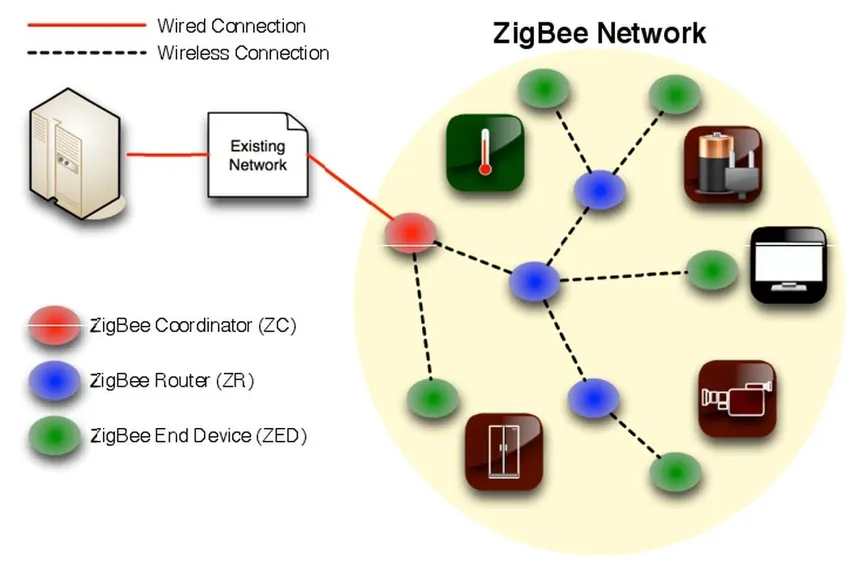
Zigbee is a wireless communication protocol specifically designed for low-power, short-range communication between smart devices. It is commonly used in smart home environments where multiple devices need to communicate efficiently without consuming large amounts of energy.
Zigbee devices operate using a mesh network, where each device can relay signals to other devices. This allows the network to expand across larger areas while maintaining stable connectivity.
Key Features of Zigbee
However, Zigbee also has limitations when it comes to cross-platform compatibility and ecosystem fragmentation.
Zigbee devices operate using a mesh network, where each device can relay signals to other devices. This allows the network to expand across larger areas while maintaining stable connectivity.
Key Features of Zigbee
- Low power consumption
- Mesh networking capability
- Reliable device-to-device communication
- Widely used in smart home products
- Supports sensors, lighting systems, and automation devices
However, Zigbee also has limitations when it comes to cross-platform compatibility and ecosystem fragmentation.
What is Matter?
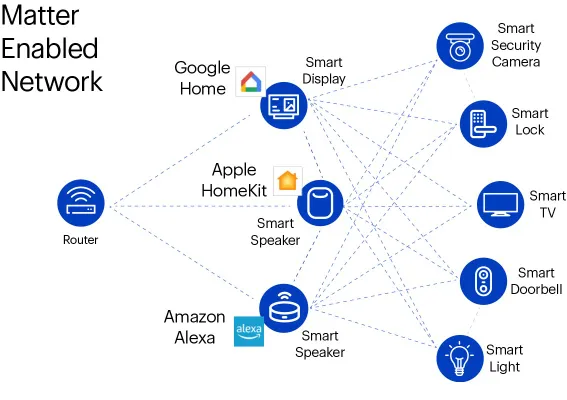
Matter is a modern smart home standard developed by the Connectivity Standards Alliance (CSA) with support from major technology companies including Apple, Google, Amazon, and Samsung. The goal of Matter is to create a universal smart home standard where devices from different brands can work together seamlessly.
Unlike older protocols that depend heavily on proprietary ecosystems, Matter focuses on interoperability, security, and simplified device integration.
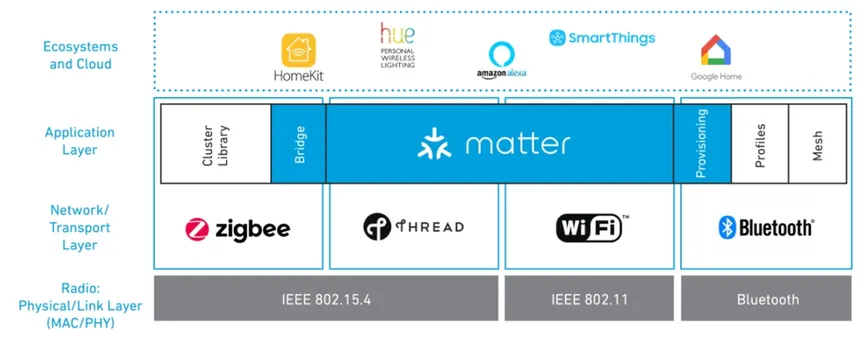
Matter works over existing network technologies such as:
Unlike older protocols that depend heavily on proprietary ecosystems, Matter focuses on interoperability, security, and simplified device integration.
Matter works over existing network technologies such as:
- Matter Over Wi-Fi
- Matter Over Thread
- Ethernet
Why Matter is More Powerful Than Zigbee
Matter represents a major evolution in smart home connectivity for several reasons.
Universal Compatibility
Matter is designed to work across multiple ecosystems without vendor lock-in. A single Matter device can integrate with multiple smart home platforms simultaneously.
This eliminates one of the biggest frustrations in smart home setups.
Simpler Setup
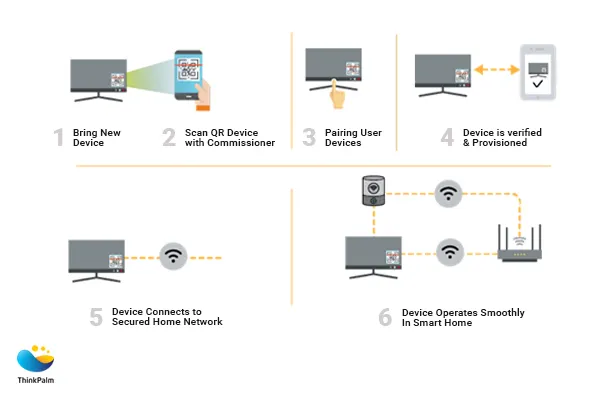
Matter devices can be added to a smart home system using a simple onboarding process, often involving scanning a QR code.
This removes the complexity of pairing and configuration seen in many older protocols.
This removes the complexity of pairing and configuration seen in many older protocols.
RivaSmart and Matter Integration
At RivaSmart, we focus on developing Matter compatible smart home products designed to work seamlessly with modern smart home platforms.
Our Matter-enabled devices are built to integrate with leading ecosystems and smart home hubs, ensuring reliable connectivity, simplified automation, and long-term compatibility.
By adopting Matter technology, we aim to deliver smart home solutions that are scalable, interoperable, and ready for the future of connected living.
Our Matter-enabled devices are built to integrate with leading ecosystems and smart home hubs, ensuring reliable connectivity, simplified automation, and long-term compatibility.
By adopting Matter technology, we aim to deliver smart home solutions that are scalable, interoperable, and ready for the future of connected living.